

Introduction
Postpartum mental load can make even a loving relationship feel painfully heavy after baby. You can love your partner, share the same home, and still feel deeply alone when you are the one carrying the remembering, planning, noticing, emotional labor, and invisible weight of motherhood. That is where postpartum resentment often begins — not always in one big fight, but in the quiet exhaustion of feeling like you are holding more than anyone sees. If you feel like you are doing more, thinking more, and carrying more while trying not to break under the pressure, this article is for you.
Start with the free 3AM Calm Starter here.
We’re Both Tired, but I’m Carrying More
Sometimes the hardest part of postpartum life is not the crying, the dishes, or the night wakes. It is being exhausted with someone and still feeling completely alone. If you are carrying the baby logistics, the emotional tone of the house, the remembering, the noticing, and the follow-up while your partner says he is tired too, you are not imagining the weight of that imbalance.
Sleep deprivation, shifting roles, and unequal labor can put real pressure on a relationship after baby. Emotional distance during postpartum does not automatically mean your relationship is failing. Very often, it means both people are under-supported, and one person is carrying too much of the invisible load.
Why it feels so lonely
The pain
The hardest part is not always the crying.
Not always the night wakes.
Not always the dishes.
Not always the laundry.
Sometimes, the hardest part is being exhausted with someone and still feeling completely alone.
You look at your partner and think:
-
How do you not see this?
-
How do you not notice what needs to be done?
-
How am I the one remembering everything?
-
Why do I have to ask for help, explain the help, assign the help, and then follow up on the help?
Then comes the guilt. Maybe he is tired too. Maybe he is trying. Maybe you do not even want to fight. But none of that changes the fact that you are drowning in invisible labor.
The insight
That specific kind of exhaustion creates a specific kind of loneliness. When postpartum mental load, sleep deprivation, and changing roles all pile up at once, even caring couples can start feeling reactive, far apart, and emotionally strained.
In many homes, the hardest part is not just doing more. It is carrying more mentally, emotionally, and relationally while trying not to sound ungrateful for noticing it.
The solution
Before you decide your relationship is broken, name the problem more accurately. This may be postpartum mental load, unequal labor, and survival-mode disconnection. Naming the real problem lowers shame and makes better conversations possible.
The example
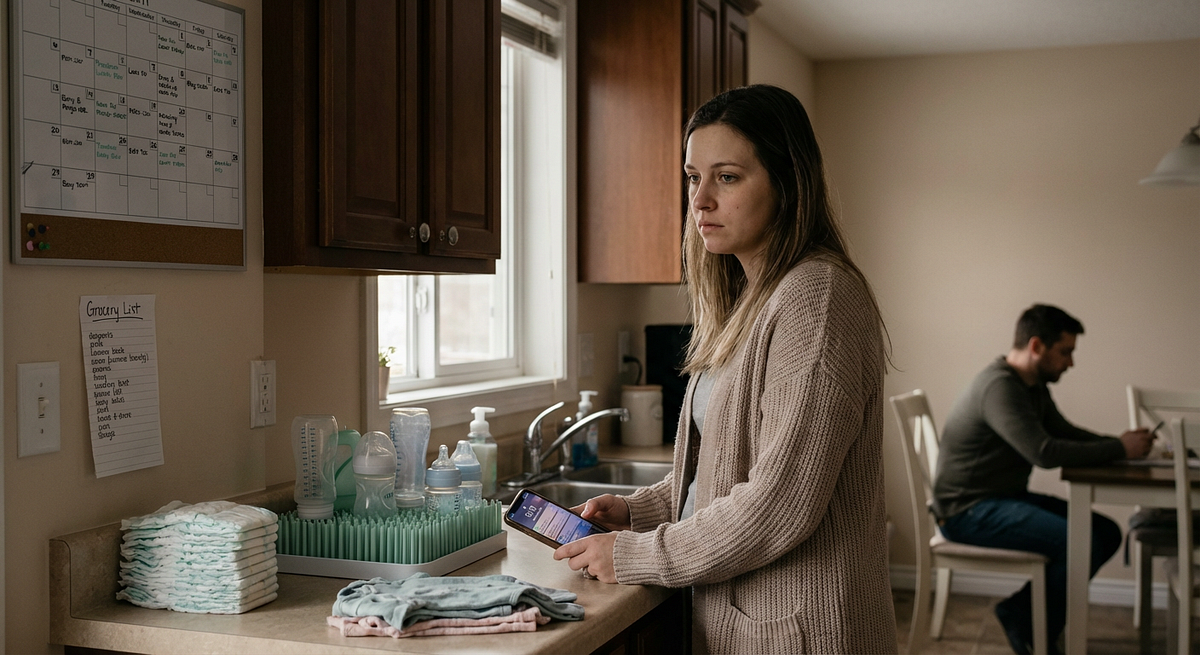
A mom asks for help with bedtime, but she also has to remember the diaper stock, prep tomorrow’s bottles, track nap timing, and think about the pediatrician form. Her partner helps with one task, but she is still carrying the system.
The Mental Load Is More Than Chores
The pain
This is what so many people miss.
The postpartum mental load is not just doing things. It is remembering things, tracking things, planning ahead, anticipating needs, noticing what is running low, knowing what the baby needs next, and carrying the emotional tone of the house on top of that.
That is why it feels so heavy. Even when your hands are still, your brain is not.
The insight
Many mothers are not only doing more visible work. They are also carrying the invisible checklist behind every task. That is why help can still feel exhausting when it has to be directed first.
The issue is not always a lack of effort from the other person. Sometimes it is the fact that one parent has become the default manager while the other is still waiting for instruction.
The solution
The goal is not just more help. The goal is more ownership.
That means:
-
Fewer reminders.
-
More initiative.
-
Clearer role-taking.
-
Less dependence on one person to hold the whole map of the house.
The example
If one parent always knows when wipes are low, when the next bath should happen, what size clothes the baby needs, and what time bedtime should start, that parent is carrying mental load even if both people are technically helping.
Married, but default parent
The pain
This is one of the most painful postpartum thoughts mothers carry in silence.
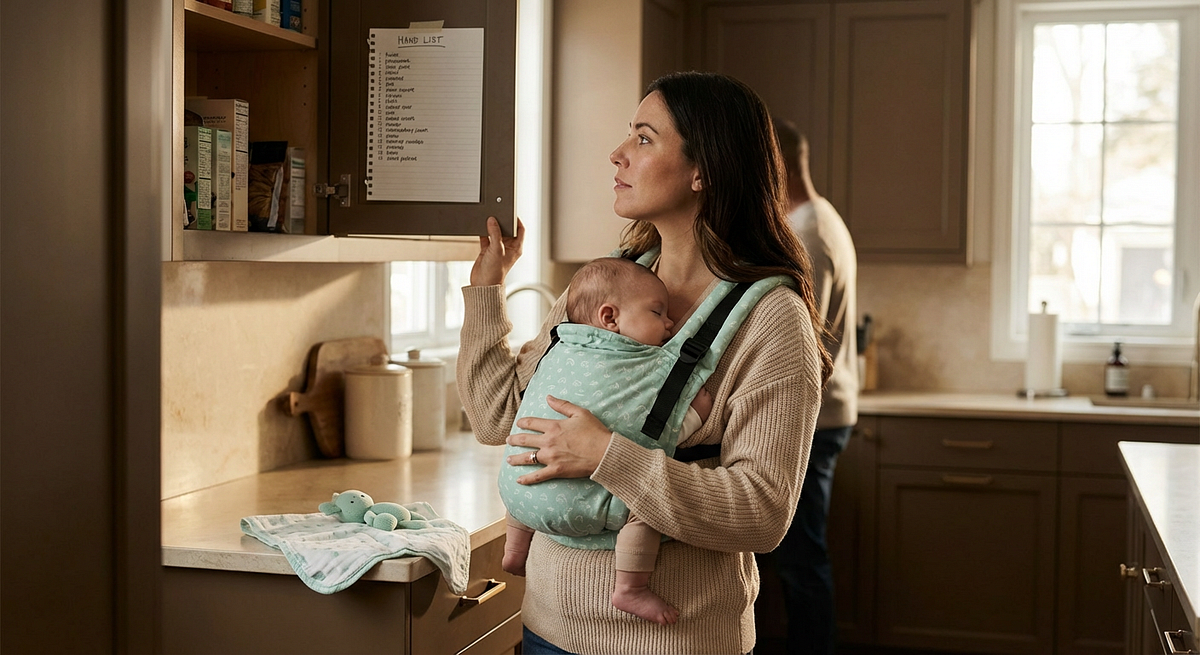
Not because you literally are alone. But because it feels like the full system of the home lives inside your body. You are the default parent, the reminder, the manager, the one holding the invisible spreadsheet in your head.
And when support only happens after you ask three times, it stops feeling like support. It starts feeling like management.
The insight
This is where resentment often grows. Not through one dramatic betrayal, but through repeated unequal responsibility and too little initiative coming back toward you.
When the burden does not feel shared, it becomes very easy to start keeping score — even when you do not want to.
The solution
Give yourself permission to say the true sentence:
“I do not just need help. I need a teammate.”
That shift matters because it moves the conversation away from chore delegation and toward partnership structure.
The example
A mother asks her partner to help more, but what she really means is: notice more, initiate more, and stop making me carry the whole operating system of this home by myself.
Survival mode
The pain
Many couples start believing the relationship is failing when what is actually happening is that both people are depleted, reactive, and under-supported.
Exhaustion changes how people hear each other. Stress changes tone. Sleep deprivation shortens patience. Overload makes simple conversations feel sharp.
The insight
When the nervous system is flooded, people are more likely to snap, shut down, defend, or assume the worst.
A lot of postpartum conflict is not created by lack of love. It is created by depletion, identity shifts, emotional overload, and uneven labor stacking on top of each other for too long.
The solution
This does not mean the pain is fake. It means the pain needs support, not shame.
Instead of asking:
-
Who is the bad guy?
Try asking:
-
What is survival mode doing to both of us right now?
The example
A short comment about bottles turns into a fight about appreciation, effort, and who does more. The bottle was not really the point. The depletion underneath it was.
Emotional Distance After Baby Hurts More Than People Admit
The pain
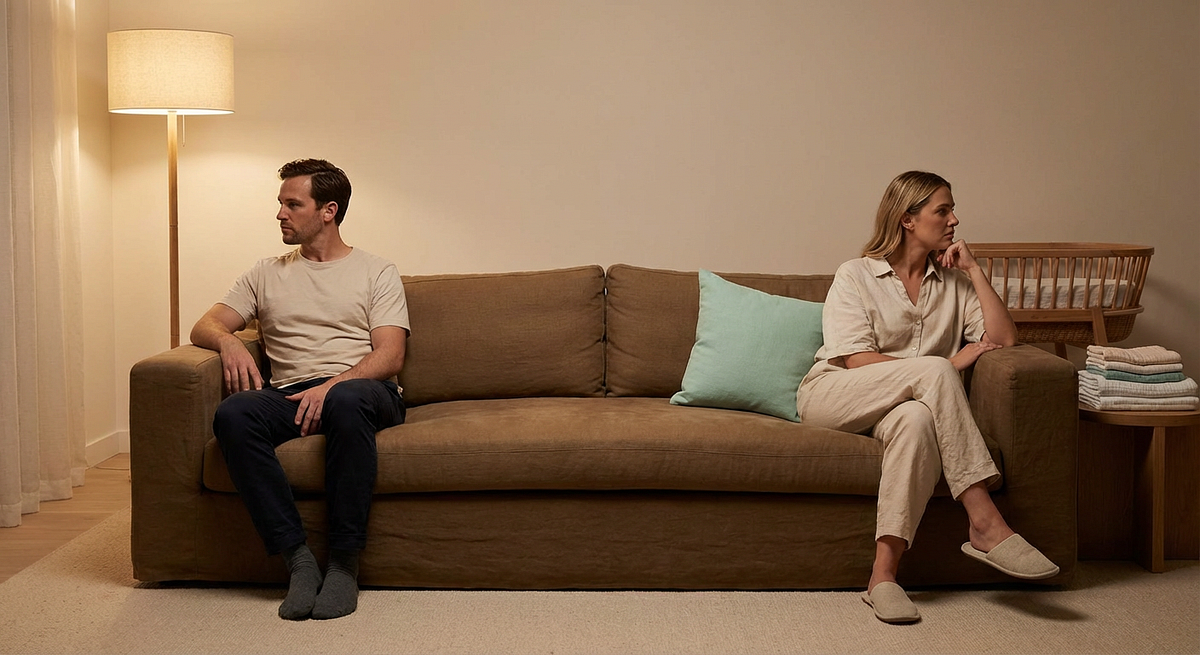
There is a kind of loneliness that only happens when the person next to you is also the person you no longer feel understood by.
You are in the same house.
Maybe even in the same bed.
But emotionally, it feels like miles.
You stop sharing because it feels like too much effort. You stop asking because asking feels disappointing. You stop explaining because translating your overwhelm takes energy you no longer have.
The insight
Emotional distance after baby is more common than people admit. It is often tied to exhaustion, unequal labor, identity shifts, and reduced couple time more than a simple lack of love.
Many couples become logistical teammates first and emotionally connected partners second. That quiet shift can create more disconnection than either person expected.
The solution
Start smaller than a giant relationship talk.
Focus on:
-
One honest sentence.
-
One practical adjustment.
-
One calmer moment of repair.
Reconnection usually returns through repeated smaller shifts, not one perfect conversation.
The example
Instead of unloading every resentment at midnight, a mom says, “I feel like I am holding the whole mental checklist alone, and I need us to change that.” That sentence is more usable than a fight with no target.
Get the printable nighttime reset here.
What actually helps
The pain
Not a perfect speech.
Not one giant emotional blow-up at 1AM.
Not pretending you are fine.
The insight
What helps is structure.
Clearer requests.
More ownership.
Less mind-reading.
Less last-minute emotional labor.
More initiative.
More repair.
More support that both people can actually use when tired.
The solution
That is exactly why SootheNest includes partner support.
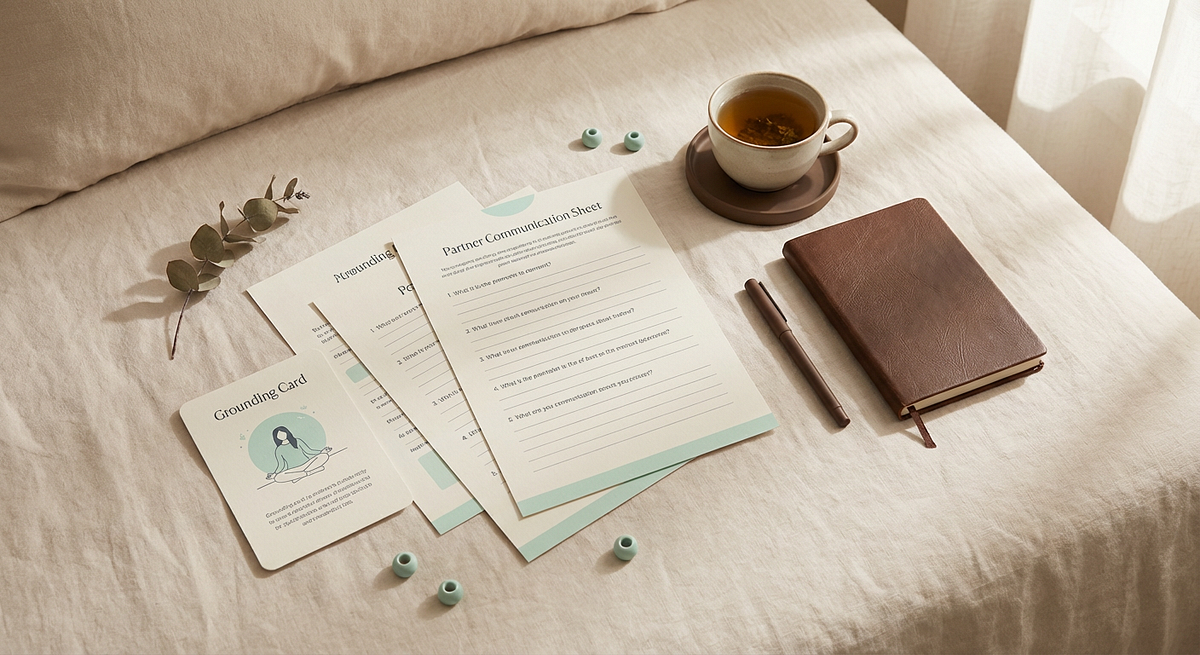
SootheNest is built for postpartum anxiety, guilt, hard nights, and relationship strain that grows when one person is carrying too much and both people are running on too little. Inside, you get printable support tools, partner scripts, grounding pages, and calmer communication aids designed to reduce resentment, lower emotional overload, and make help clearer without needing perfect words in the moment.
The example
Instead of trying to explain everything in the middle of a spiral, a mother uses one grounding page first, then one partner script later, so the conversation starts from regulation instead of explosion.
Real-life examples
-
You ask for help with bedtime, but still have to explain the whole bedtime system.
-
Your partner takes the baby for 20 minutes, but you are still the one mentally tracking the next feed, next diaper, and tomorrow’s schedule.
-
You stop asking for help because asking feels like more work than doing it yourself.
-
You resent small things because they symbolize a much bigger imbalance.
-
You are both tired, but only one of you feels mentally on call all the time.
These examples are common because resentment often grows not only from tasks, but from invisible planning, anticipation, and emotional labor.
If this feels familiar
Maybe the problem is not that you are asking for too much. Maybe the problem is that you have been carrying too much for too long.
Start with the free 3AM Calm Starter if tonight feels emotionally heavy and you need something grounding before another hard conversation. And if you already know your postpartum stress is affecting both your nervous system and your relationship, SootheNest offers deeper structured support for both.
Download the free 3AM Calm Starter here.
Explore the full SootheNest system here.
Final thought
Good couples can still struggle after baby.
Struggling does not mean you have failed. It often means you need support that matches the weight you are carrying.
Disclaimer:
This article is for informational and emotional support purposes only and is not a substitute for medical, mental health, or professional postpartum care. If your symptoms feel severe, urgent, or unsafe, contact a qualified healthcare provider or emergency support right away.