

Itroduction
Postpartum overwhelm can make even beautiful motherhood feel painfully heavy. You can love your baby deeply, feel grateful for this season, and still feel emotionally stretched, mentally overloaded, and quietly crushed by how much you are carrying. That does not make you ungrateful. It often means unsupported motherhood, invisible labor, postpartum guilt, and emotional exhaustion are taking more from you than anyone sees. If motherhood feels beautiful on the outside but unbearably heavy on the inside, this article is for you.
Start with the free 3AM Calm Starter here.
Motherhood Is Beautiful. Unsupported Motherhood Is Heavy
Motherhood can be beautiful, tender, and life-changing. But unsupported motherhood can also feel crushing in ways many women never say out loud. You can love your baby deeply and still feel buried under the invisible weight of postpartum life.
If you feel exhausted, overstimulated, guilty, and emotionally stretched too thin, this is for you.
Why Unsupported Motherhood Feels So Heavy
The pain
Motherhood is beautiful.
But unsupported motherhood is heavy.
That is the sentence so many women are quietly living inside, even if they never say it out loud.
Because yes, there is love.
Yes, there is tenderness.
Yes, there are moments that break your heart open in the best way.
But there is also the other side.
The side where you are exhausted before the day even starts.
The side where your brain never fully shuts off.
The side where you are holding the baby, holding the house, holding the schedule, holding the emotions, holding the guilt — and somehow still wondering why you feel like you are falling apart.
The insight
A lot of postpartum struggle is not about a lack of love. It is about a lack of support.
That distinction matters. Many mothers assume that if postpartum life feels too heavy, the problem must be them. But often the real issue is invisible labor, emotional overload, mental load, sleep deprivation, and the expectation that women should absorb all of it quietly.
In the U.S., this pressure is often even heavier because many mothers face short maternity leave, fragmented community support, and the pressure to appear grateful and capable at all times.
The solution
If this sounds familiar, start by changing the story.
You are not ungrateful.
You are not lazy.
You are not a bad mom for finding this heavy.
The first shift is not pushing harder. The first shift is telling the truth more accurately: unsupported postpartum life feels heavy because it is heavy.
Example
A mother spends the whole day meeting everyone’s needs, then feels ashamed at night for being irritable and depleted. She assumes she is failing motherhood, when the real problem is that she is carrying too much without enough support.
The Part Nobody Sees
The pain
People often see the baby.
They see the tiny clothes.
The pictures.
The milestones.
The cuddles.
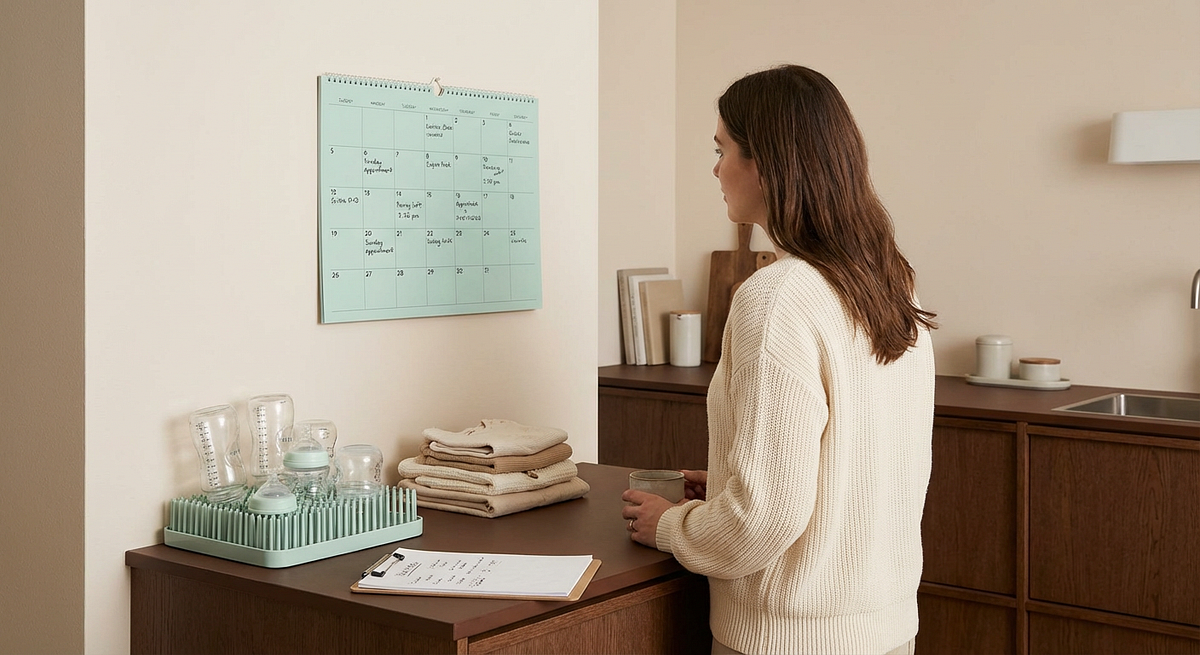
What they do not see is the invisible labor sitting behind your eyes.
The mental checklist that never stops.
The constant noticing.
The remembering.
The emotional management.
The pressure to stay soft when you are already overstimulated.
The guilt that shows up the second you lose patience, need a break, or realize you cannot keep carrying everything alone.
The insight
This is one reason postpartum can feel so lonely, even when you are technically never alone.
Your body may be touched all day.
Your mind may never get quiet.
And still, your pain can remain completely invisible.
A lot of new moms are not just physically tired. They are mentally loaded, emotionally overused, and socially unseen. That is why postpartum overwhelm, maternal burnout, and emotional exhaustion can build quietly in the background.
The solution
Instead of asking, “Why can’t I handle this better?” ask:
-
What am I carrying that nobody sees?
-
What part of this is invisible labor?
-
Where am I unsupported?
-
What would make this lighter, not just more efficient?
Those questions open the door to compassion instead of self-attack.
Example
A mother may look fine from the outside while internally tracking naps, feeds, household needs, emotional tone, laundry, appointments, groceries, and whether everyone else is okay. No one sees the full weight, but her nervous system feels all of it.
You Can Love Your Baby and Still Feel Like You’re Drowning
The pain
This is the part so many mothers feel ashamed to admit.
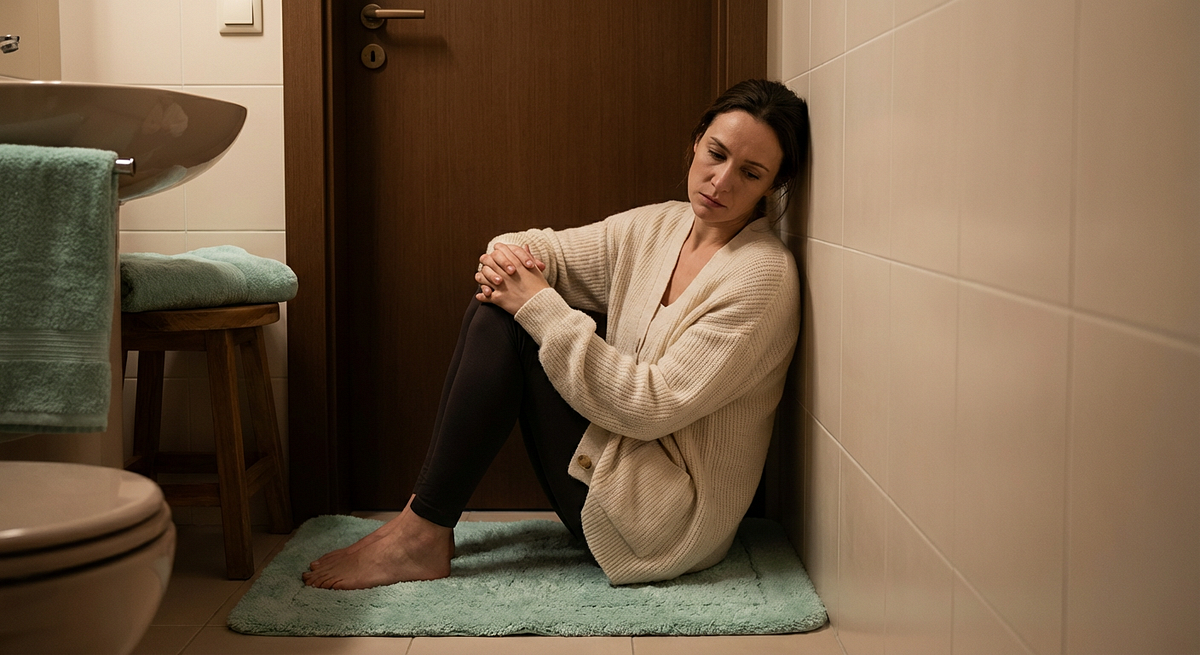
You can love your baby with your whole body…
and still cry in the bathroom.
You can be grateful…
and still fantasize about being left alone for one full hour.
You can know your child is a gift…
and still feel crushed by the relentlessness of being needed.
The insight
None of that makes your love fake.
It makes you human.
And when support is missing, even beautiful things can start to feel unbearably heavy. Unsupported motherhood turns ordinary hard moments into private evidence that you are failing, even when what is really happening is overload.
The solution
You do not need to prove your love by suffering silently.
You can love your baby deeply and still need:
-
Rest.
-
Space.
-
Help.
-
Structure.
-
Reassurance.
-
Support for your own nervous system.
Need does not cancel love. It reveals humanity.
Example
A mother adores her baby but still feels panic when she hears crying start again after a sleepless night. Her love is real. Her depletion is real too.
When Guilt Starts Running the House
The pain
Postpartum guilt is not always loud at first.
Sometimes it starts small.
You snapped.
You cried.
You put the baby down so you would not lose it.
You ordered food again.
You let the laundry sit.
You did not enjoy the moment the way you thought you should.
Then the guilt starts building a story.
A good mom would handle this better.
A calmer mom would not feel this angry.
A stronger mom would not need so much help.
A more grateful mom would not be this overwhelmed.
And slowly, guilt stops being a feeling and starts becoming a voice.
A voice that follows you through the kitchen.
Into the shower.
Into bed.
Into the dark.
The insight
This is where postpartum anxiety and mom guilt often loop together. Once your nervous system is overloaded, your brain becomes more vulnerable to worst-case thinking, self-blame, hypervigilance, and harsh interpretations of ordinary hard moments.
That is why guilt can feel so convincing when you are exhausted.
The solution
You do not fight guilt by punishing yourself harder.
You soften guilt by creating space for:
-
Regulation.
-
Repair.
-
Self-compassion.
-
Support that helps you reset before shame takes over.
One hard moment does not define your motherhood.
Example
A mother loses patience, raises her voice, and then spends the rest of the night replaying the moment as proof she has damaged her baby. In reality, the moment needs repair and reconnection, not lifelong self-condemnation.
Get the printable guilt + nighttime reset here.
You Didn’t Ruin Your Baby
The pain
If you lost patience today…
if you raised your voice…
if you shut the bathroom door and cried…
if you looked at your life and thought, “I cannot do this like this”…
Shame will try to tell you that the damage is done.
The insight
But one hard moment does not define your motherhood.
Repair matters more than perfection. Shame is not a parenting strategy. What mothers often need after a hard moment is not punishment. It is regulation, reconnection, and support.
The solution
After a hard moment, try this:
Regulate first
Pause before judging yourself.
Repair simply
Reconnect with softness, presence, or a calm moment when you can.
Reduce the spiral
Do not turn one hard moment into a full identity statement.
Reach for support
Use a grounding tool, a journal prompt, or a low-pressure reset.
Example
A mother cries after bedtime because she feels like she ruined the day. The next morning, she reconnects gently, speaks softly, and realizes the relationship was never destroyed by one imperfect hour.

Emotional Exhaustion Is Real
The pain
There is a kind of tiredness that sleep does not fix.
A tiredness made of:
-
Carrying too much.
-
Making too many decisions.
-
Being needed too often.
-
Never fully exhaling.
That is emotional exhaustion.
And for a lot of mothers, it sounds like:
-
“Everything feels loud.”
-
“I am touched out.”
-
“I can’t think straight.”
-
“I feel behind all the time.”
-
“Even small things make me want to cry.”
-
“I’m functioning, but barely.”
The insight
This kind of postpartum exhaustion is not laziness. It is depletion.
When your system is overloaded for too long, even simple things start feeling impossible. That is why maternal burnout often looks like irritability, numbness, resentment, overwhelm, emotional distance, and crying easily.
The solution
Do not measure yourself only by what still gets done. Measure what your system has been carrying.
Support here often needs to be smaller and simpler than people think:
-
Fewer decisions.
-
Less noise.
-
One-page grounding tools.
-
Practical emotional resets.
-
Support you can use while tired.
Example
A mother cannot even decide what to eat, answer a text, or fold one basket of laundry without wanting to cry. From the outside it looks small. Inside, her system is overloaded.
Random Coping Is Not the Same as Real Support
The pain
A saved quote can help for ten seconds.
A tip can help for one hard moment.
But if you are carrying guilt, anxiety, overthinking, burnout, and emotional overload on repeat, random coping will always feel incomplete.
The insight
This is where a lot of moms get stuck. They are not lacking information. They are drowning in it.
They do not need more tabs.
More videos.
More pressure.
More guilt for not coping better.
They need support that is quiet, usable, low-friction, and structured enough to help while exhausted.
The solution
That is why SootheNest exists.
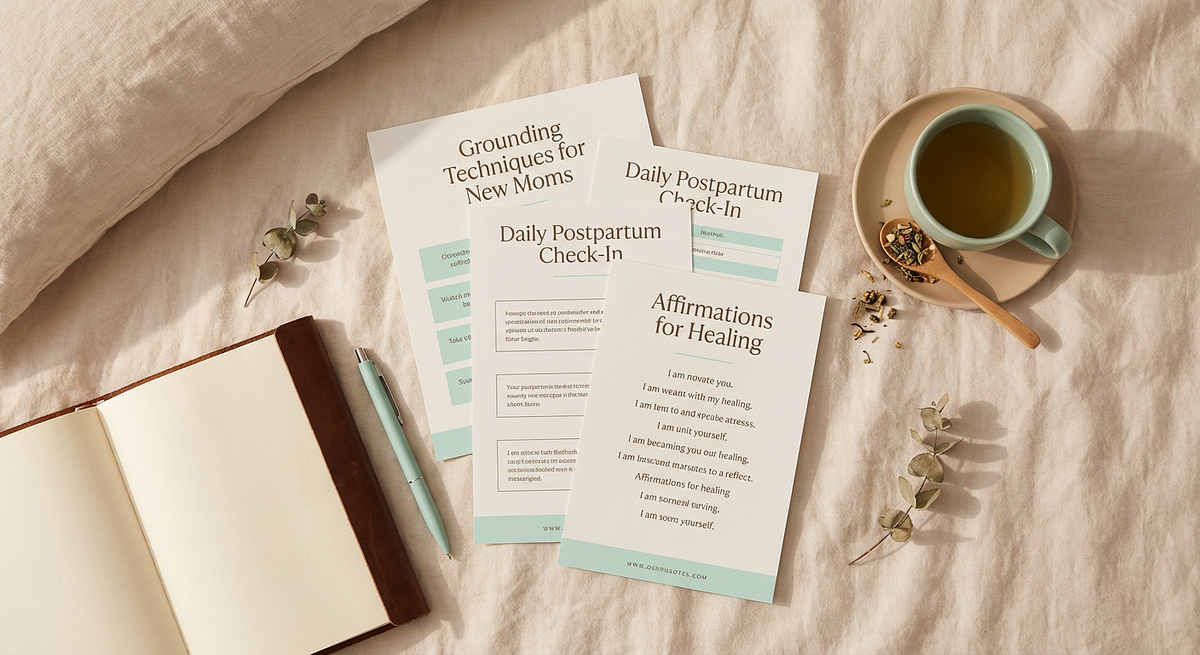
SootheNest is a quiet postpartum support system for mothers dealing with anxiety, guilt, emotional overwhelm, hard nights, and the invisible weight of unsupported motherhood. It includes printable grounding tools, gentle prompts, emotional resets, and partner support pages designed to make hard moments easier to navigate without more noise.
Example
Instead of opening ten tabs during a guilt spiral, a mother opens one printable reset, follows one structured page, and finds enough steadiness to interrupt the spiral before it grows.
Real-Life Examples of Unsupported Motherhood
Example 1: The touched-out mom
She has held the baby all day and been needed constantly. By evening, even one more question feels unbearable, and then she feels guilty for needing space.
Example 2: The invisible planner
She remembers every appointment, every feeding pattern, every supply running low, every household detail, and still wonders why her brain feels fried.
Example 3: The nighttime spiraler
She gets through the day in survival mode, but once the house is quiet, guilt and anxiety get loud. Night becomes the only time she can hear how overwhelmed she really is.
Example 4: The “fine” mom
She smiles in pictures, answers texts, and keeps functioning. But inside, she feels emotionally threadbare and one small inconvenience away from tears.
If This Feels Like Your Real Life
Then do not brush it off just because everyone else keeps calling this season normal.
Maybe it is common.
But that does not mean you should have to carry it unsupported.
Start with the free 3AM Calm Starter if you need something gentle tonight. And if you are tired of surviving postpartum guilt one spiral at a time, SootheNest is here with deeper, structured support too.

Download the free 3AM Calm Starter here.
Explore the full SootheNest system here.
Final Thought
Motherhood can be beautiful.
But it was never meant to be carried alone.
Disclaimer:
This article is for informational and emotional support purposes only and is not a substitute for medical, mental health, or professional postpartum care. If your symptoms feel severe, urgent, or unsafe, contact a qualified healthcare provider or emergency support right away.